Is Talc Bad In Makeup? Understanding The Headlines
Most of us love makeup, even if it’s just for special occasions. Or maybe a daily swipe of mascara and a little setting powder (my busy days go-to!). But if you’re here, I’m betting you’ve become more mindful about the ingredients in your personal care products, and in general, questions about makeup safety have become more common.
One ingredient that comes up often in these conversations is talc.
Talc is one of the most common ingredients used in cosmetic products, especially powders, foundations, and blushes. For decades, it has been widely used because of its ability to absorb moisture, improve texture, and help pigments blend smoothly. However, over the past several years, talc has also become the subject of growing concern.
Many people worry about the potential connection between talcum powder and asbestos contamination. Lawsuits, media coverage, and research into possible cancer risks have all contributed to confusion about whether talc is truly safe in makeup. Some studies have explored links between long-term exposure to contaminated talc and conditions such as lung cancer or women being diagnosed with ovarian cancer, particularly when products from baby powder were used in the genital area.
Because of these concerns, you may be asking: Is talc bad in makeup?
Today, I’m dedicating this post to breaking down the science, explaining what talc actually does in cosmetics, and helping you decide whether you feel comfortable using makeup that contains it.
Is Talc Bad In Makeup?
The short answer is that the safety of talc in cosmetics products depends on several factors, including how it is sourced, how it is tested, and whether it is contaminated with asbestos.
Asbestos is the key concern, and rightly so, as it’s a major carcinogen.
In the United States, the Food and Drug Administration (supposedly) monitors the safety of cosmetic and personal care products. However, unlike pharmaceutical drugs, cosmetic ingredients are not required to be pre-approved before they enter the market. This means companies are responsible for ensuring the safety of the ingredients they use in their personal care products. In simple terms, many problem ingredients aren’t thoroughly tested and instead considered safe until problems are reported. But there are working groups trying to advocate for more safety testing prior to using ingredients widely.
The Food and Drug Administration is aware of the issues with talc. Over the years, the agency has worked with industry groups and scientists to evaluate testing methods designed to detect asbestos contamination in talc. These methods are intended to identify microscopic asbestiform fibers, which are the forms of asbestos known to cause health risks.
On a global level, organizations like the World Health Organization and the International Agency for Research on Cancer have evaluated talc and asbestos exposure. Their findings differentiate between types of talc exposure.
For example:
- Talc contaminated with asbestos is classified as carcinogenic.
- Occupational exposure to talc containing asbestiform fibers is also considered a cancer risk.
- However, cosmetic-grade talc that is carefully refined and tested to be asbestos-free talc is treated differently.
In other words, when evaluating whether asbestos in talc is a concern, the most important factor is contamination.
Because of this, whether or not talc is bad in makeup depends largely on several variables:
- Where the talc is sourced
- How manufacturers test for contamination
- Whether the product contains contaminated talc
- The type and amount of exposure
- Your personal comfort level with the ingredient
For many people, these uncertainties have led them to look for talc-free alternatives, which have become increasingly popular in the clean beauty space.
What Is Talc In Makeup exactly?
To understand the debate around talc, it helps to first understand what the ingredient actually is.
Talc is a naturally occurring mineral that is mined from deposits in the earth. It is composed primarily of magnesium, silicon, and oxygen. When processed into a powder, talc becomes extremely soft and smooth, which is why it has long been used in cosmetics and personal care products.
Talcum powder has historically been used in many different products, including:
- Baby powders
- Body powders
- Face powders
- Eye shadows
- Blushes
- Foundations
Because talc is so soft and absorbent, it works well in powdered cosmetics products that need to glide onto the skin smoothly.
However, one complication is that talc deposits can sometimes occur naturally near asbestos deposits underground. This geological proximity is what created concerns about contaminated talc.
Modern cosmetic manufacturers typically use asbestos free talc, which undergoes purification and testing to remove potential contamination. Industry groups and regulatory bodies have also developed advanced testing methods designed to detect even tiny traces of asbestiform fibers.
Still, concerns about contamination continue to influence consumer preferences, particularly within the clean beauty movement.
What Does Talc Do In Makeup?
Talc plays several important roles in cosmetic formulas. In fact, it’s one of the most versatile ingredients used in powder makeup.
Some of the main functions of talc in cosmetics include:
- Absorbs moisture – Talc helps absorb excess oil and sweat from the skin.
- Reduces shine – It helps create a matte finish, which is especially helpful for oily skin.
- Improves texture – Talc gives powder products a silky, smooth feel.
- Prevents caking – It helps powders apply evenly and prevents clumping.
- Helps pigments blend smoothly – Talc allows color pigments to disperse evenly across the skin.
- Increases product longevity – Talc helps makeup stay in place longer throughout the day.
Because of these benefits, talc is commonly used in many powder-based cosmetics products.
How Bad Is Talc In Makeup?
So how bad is talc in makeup, really?
The answer depends on the quality and safety of the talc used.
Scientific research has primarily focused on situations where talc was contaminated with asbestos, which is a known carcinogen linked to serious illnesses, including lung cancer and mesothelioma. In these cases, long-term exposure to asbestos fibers can pose significant health risks.
You’re probably most familiar with the lawsuits surrounding some baby powder about a decade ago. Since then, there have been studies examining the potential risk of ovarian cancer when talcum powder products were used in the genital area over long periods of time.
When it comes specifically to makeup, most experts emphasize that exposure levels are typically much lower than in occupational settings where people inhale large amounts of dust over many years.
Cosmetic companies also increasingly rely on strict testing methods to ensure their talc is not contaminated with asbestos.
In other words, the main concern surrounding talc is not the mineral itself, but the possibility of talc being contaminated with asbestos during mining or processing.
Why Is Talc In Makeup Bad?
Even though many products use purified talc, there are several reasons why consumers remain concerned about the ingredient.
Lawsuit Publicity
One of the biggest drivers of public concern has been high-profile lawsuits involving talcum powder and cancer claims (as I mentioned above). Some plaintiffs alleged that they were diagnosed with ovarian cancer after long-term use of talcum powder products.
These cases received extensive media coverage, which raised awareness and concern among consumers.
Asbestos Association
Because talc deposits can occur near asbestos deposits, contamination is possible which has led many people to question whether talc containing cosmetic products are safe to use.
Clean Beauty Trends
The clean beauty movement has encouraged consumers to examine ingredient labels more closely.
As more people seek minimalist formulas and safer alternatives, brands are reformulating their products to eliminate ingredients that raise consumer concerns, including talc.
Sensitive Skin Concerns
Some people also avoid talc because it can feel drying or irritating on very sensitive skin.
Although this is not a universal experience, certain individuals may prefer alternative ingredients that are more soothing.
Respiratory Sensitivity
Powder makeup can sometimes become airborne during application. For people with respiratory sensitivity, inhaling fine particles from powdered personal care products may cause irritation.
This is another reason some consumers prefer talc-free formulations.
What Makeup Has Talc In It?
Talc is most commonly found in powder-based makeup products. The amount used varies depending on the type of formula and the desired texture.
Here are some common culprits:
Setting Powder
Setting powders often contain some of the highest concentrations of talc. These products absorb oil, reduce shine, and keep foundation in place throughout the day.
Matte Foundation
Powder foundations frequently rely on talc to create a smooth texture and matte finish. Talc helps these formulas glide onto the skin evenly while controlling oil.
Powder Blush
Powder blush formulas may include smaller amounts of talc to help disperse pigments evenly and improve blendability.
Contour Palette
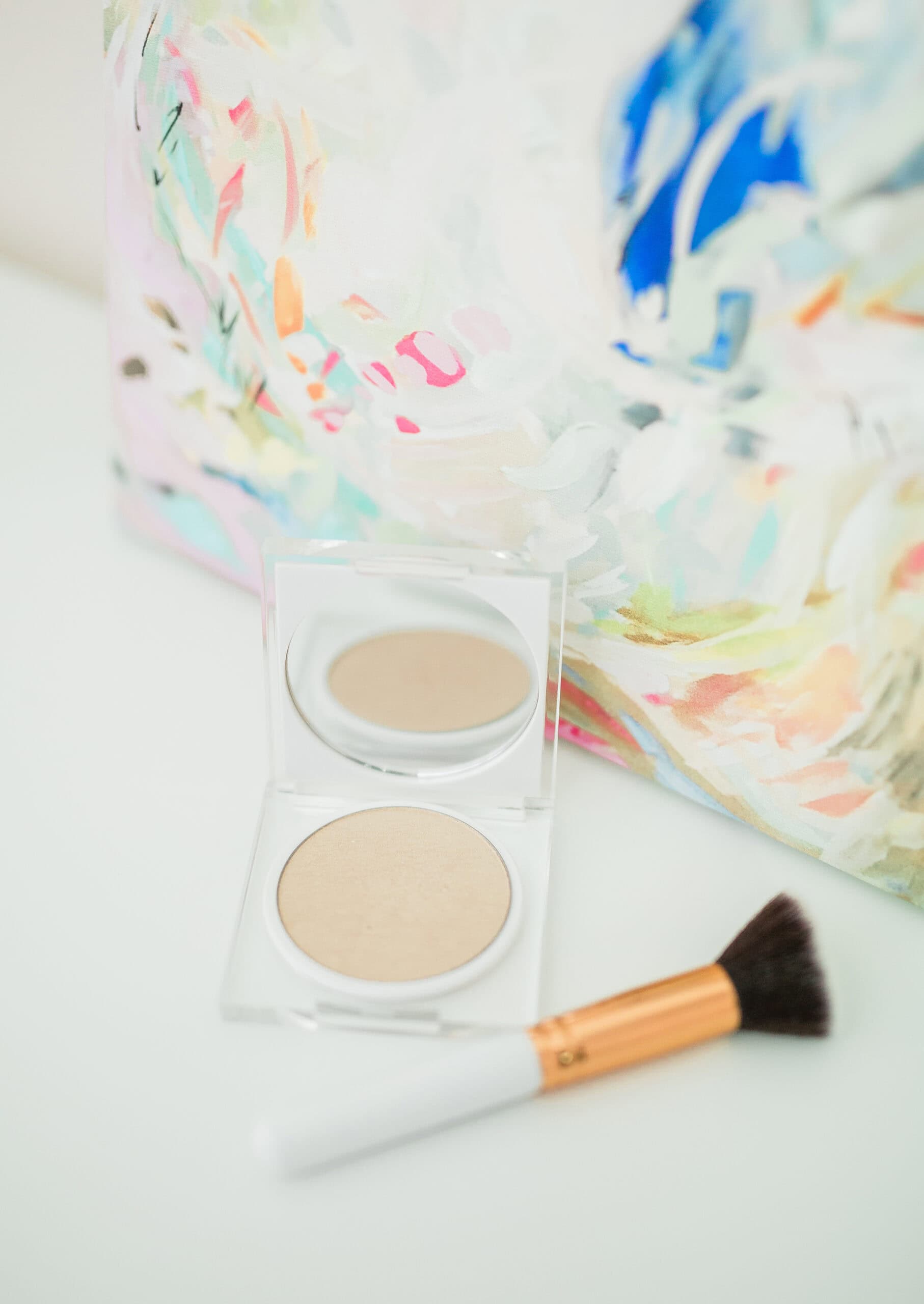
Contour and bronzer palettes sometimes use talc to create a soft, buildable powder texture that is easy to blend across the skin.
Because talc is so effective at improving texture and helping powders prevent caking, it has long been a staple ingredient in these types of cosmetic products.
What Makeup Brands Do Not Use Talc?
As demand for talc-free makeup has grown, many clean beauty brands have reformulated their products to avoid the ingredient entirely.
Instead of talc, these companies often use alternatives like rice powder, silica, cornstarch, bamboo powder, or clay minerals.
Here are several popular brands that offer talc-free cosmetic products.
RMS Beauty
One of my favorite brands! RMS Beauty has great products.
Almost all products are talc-free, and the website easily identifies which products are talc-free (on the product page, near the description, you’ll see a symbol and label stating talc free). Instead of talc, RMS often uses ingredients like silica or natural mineral powders to create smooth textures.
Some of their best-selling products include the Luminizer and the “Un” Cover-Up Concealer.
ILIA Beauty
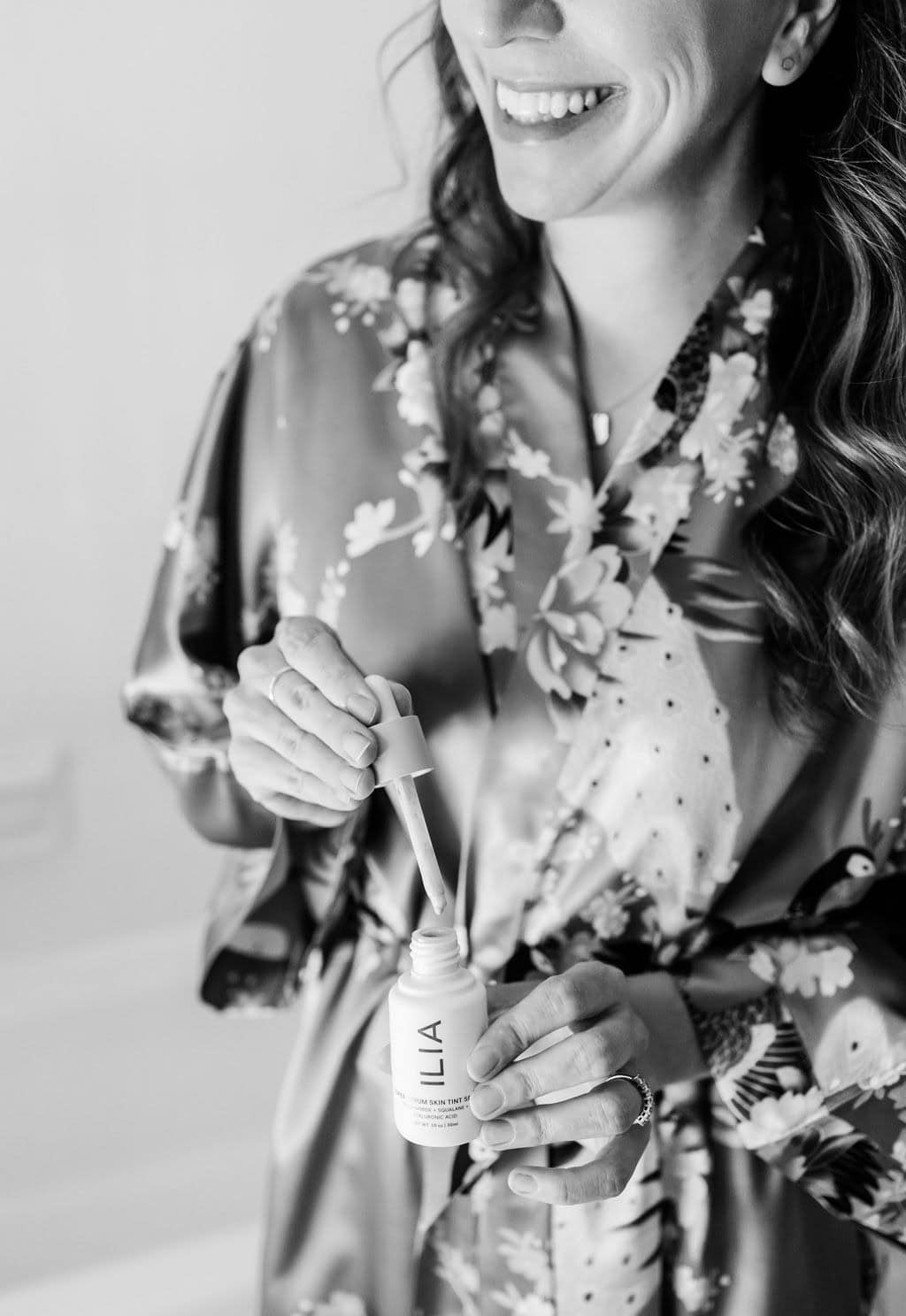
ILIA Beauty is another top pick and they avoid using any talc.
Many of the brand’s products are talc-free and rely on alternative powders that create a soft, natural finish.
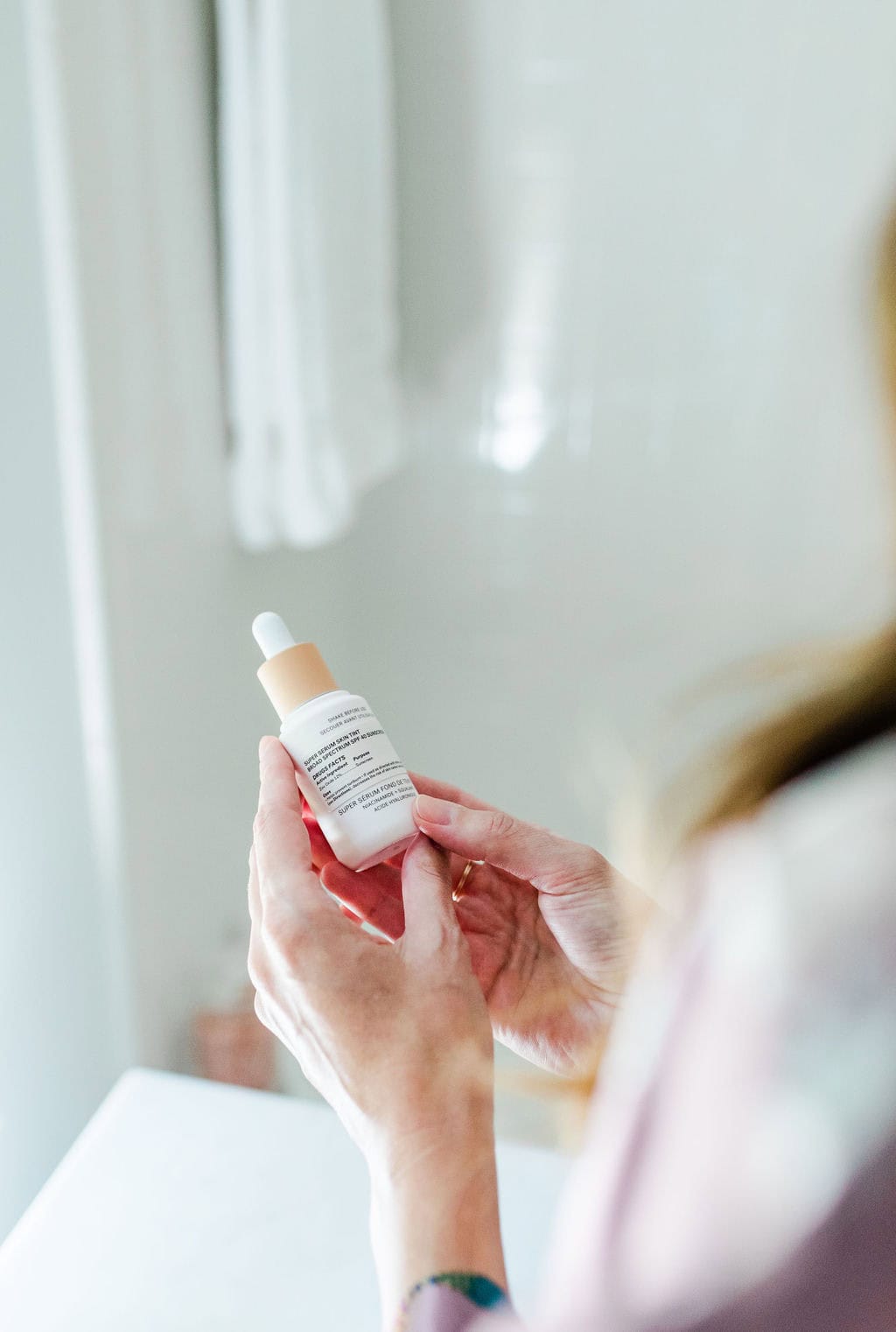
Popular products include the Super Serum Skin Tint and their Limitless Lash Mascara.
Saie Beauty
Saie Beauty is another brand that avoids using talc in any of their products.
The brand emphasizes transparency in its ingredient sourcing and avoids talc in favor of ingredients like silica and plant-derived powders.
Their Dew Blush and Slip Tint are two standout products.
If you’re interested in discovering more brands like these, you might also enjoy my guide to the best affordable clean makeup brands, which highlights several budget-friendly options that prioritize safer ingredients.
So, is talc bad in makeup?
The answer is more nuanced than a simple yes or no.
Talc is a naturally occurring mineral that has been used in cosmetics for decades because of its ability to absorb moisture, improve texture, and create smooth, long-lasting powder formulas.
However, concerns about talc and asbestos, along with the possibility of contaminated talc, have led many consumers to rethink their comfort level with the ingredient.
While many companies now use carefully tested asbestos free talc, others are choosing to eliminate talc altogether in response to consumer demand for cleaner formulas. If you do decide to use products with talc, I recommend going with brands you trust.
Some people feel comfortable with modern safety standards and testing methods, while others prefer to stick with talc-free alternatives. Ultimately, deciding whether to use talc-containing makeup is a personal choice. Either way, an informed consumer is the best consumer!
*Affiliate links used. All thoughts and opinions are my own.