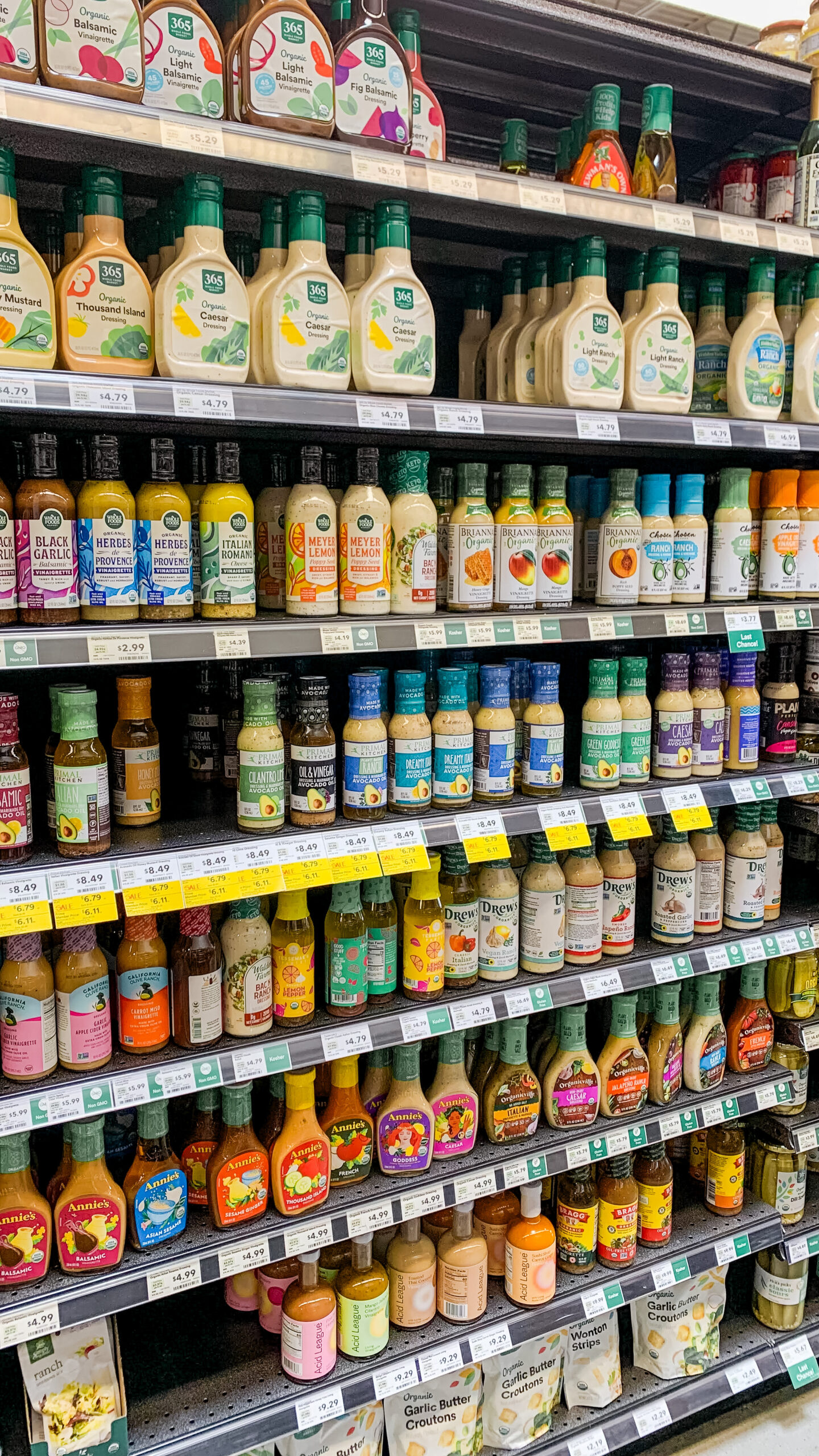
What Is The Difference Between All Natural And Organic?

When it comes to choosing safe products for yourself and your family, labels matter, but they can also be incredibly confusing. Terms like all natural and organic are everywhere, from organic food aisles at the grocery store to skincare, supplements, and even cleaning products.
The problem? Most people assume these terms mean the same thing.
They’re often used interchangeably in marketing, which creates confusion and can lead to purchasing decisions based on incorrect assumptions. Some brands even offer both options, which gets very confusing. You might think you’re choosing a cleaner or safer option, when in reality, the label may not mean what you think it does.
So today, we’re breaking it all down, so you can shop with confidence: What is the difference between all natural and organic?

What Is The Difference Between All Natural And Organic?
Understanding the difference between all natural and organic helps you be an informed shopper and make better buying decisions.
When brands use terms like natural food or organic ingredients, it can create a sense of trust, but without understanding what those words actually mean, it’s often confusing and results in paying more for things that aren’t actually organic. So let’s get into it!
FYI- If you’re trying to create a healthier lifestyle, or even just understand what is a healthy home, knowing how to interpret these labels is an important first step.
Is All Natural And Organic The Same?
No, all natural and organic are not the same.
While they may overlap in some cases, they are fundamentally different in terms of regulation, standards, and meaning.
- All natural is largely a marketing term
- Organic is tied to specific standards set by the department of Agriculture (USDA).
This distinction is key when evaluating foods labeled as healthier or safer options.
What Does All Natural Mean?
The term all natural sounds reassuring, but it’s important to understand that it has no universal legal definition in most industries.
In the United States, the United States Department of regulatory agencies, including the FDA, offers only limited guidance. There is no strict enforcement around the term, which means companies can use it quite loosely.
Products labeled all natural may still include:
- Additives
- Preservatives
- Highly processed ingredients
Even in natural food products, the ingredients may have gone through significant processing or may not be sourced in a way that aligns with what most people expect from the word “natural.”
Are All Natural Products Safe?
Not necessarily, and this is one of the biggest misconceptions.
Just because something is labeled all natural doesn’t automatically make it safe or non-toxic.
Here are a few common misunderstandings:
- Natural ingredients can still cause irritation or allergic reactions
- Some naturally derived substances can be harmful
- “All natural” products may still contain hidden synthetic ingredients
This is why it’s so important to look beyond marketing claims and evaluate the full ingredient list.

What Does Organic Mean?
The term organic is much more strictly defined, especially when it comes to organic food.
In the United States, organic standards are regulated by the state Department of Agriculture under the department of agriculture USDA. These standards are part of a certification process that ensures consistency and transparency.
To be labeled organic, products must meet specific requirements, including:
- Avoiding synthetic pesticides and fertilizers
- Not using genetically modified organisms (GMOs)
- Prohibiting the use of antibiotics and growth hormones in livestock
- Supporting responsible organic farming practices
This means when you see foods labeled organic, there is a higher level of accountability behind that claim.
Different Types Of Organic Products:
100 Percent Organic
These products contain only organic ingredients and meet the highest standard.
Organic
Products labeled organic must contain at least 95% organic ingredients.
Made With Organic Ingredients
These products contain at least 70% organic ingredients but may still include non-organic components.
Understanding these distinctions can help you better evaluate labels and decide what aligns with your priorities.
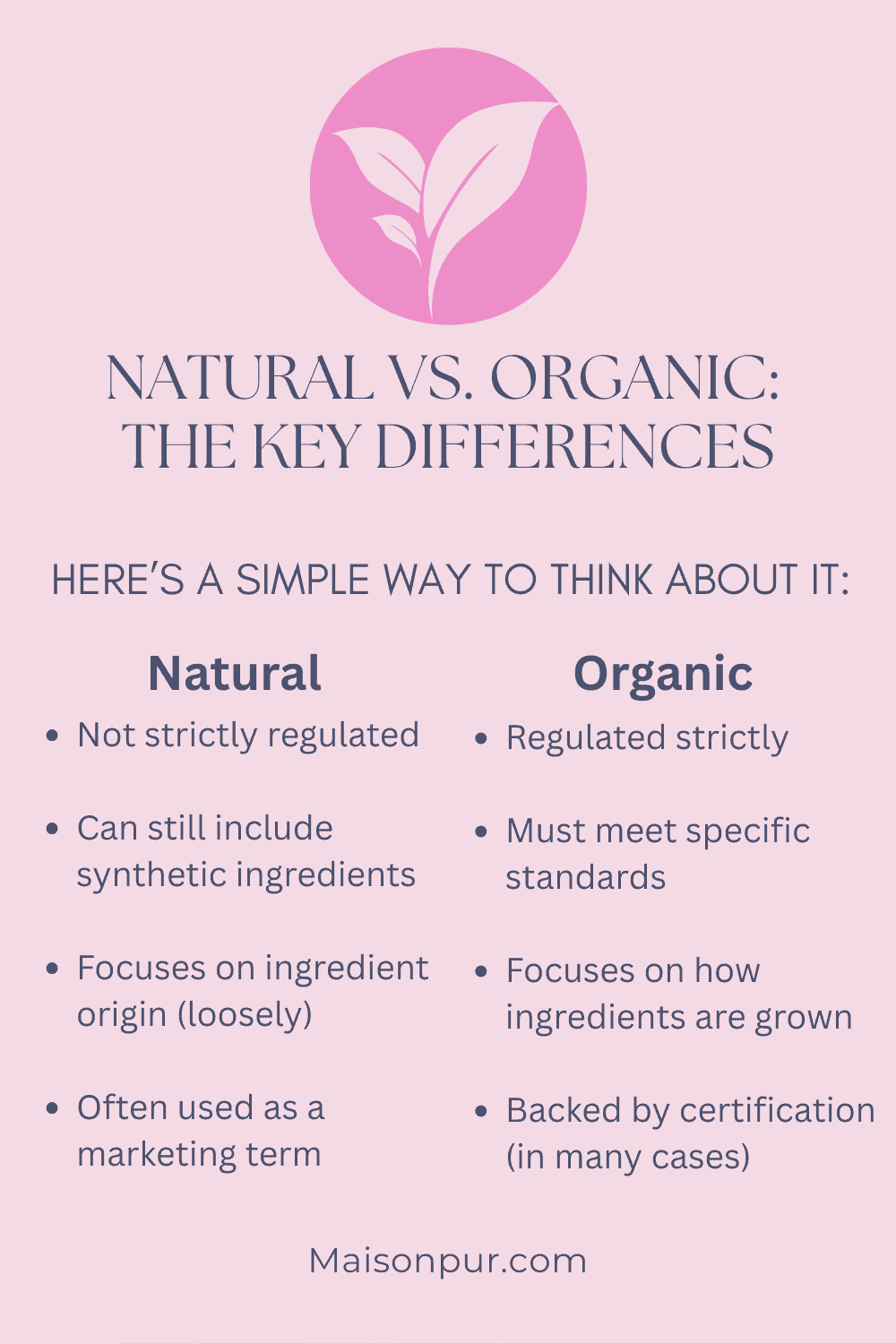
What Is The Difference Between Organic And All Natural?
When comparing organic and all natural, the differences become much clearer:
- Regulation: Organic is regulated; all natural is not
- Marketing Language: All natural is often used for branding, while organic must meet certification standards
- Ingredient Sourcing: Organic focuses on how ingredients are grown and produced
- Production Standards: Organic products follow strict guidelines; natural products do not
- Price: Organic products often cost more due to stricter farming and production practices
This is why organic products tend to be more expensive: they require more careful sourcing, certification, and adherence to specific standards.
Which is better, all-natural or organic?
The better choice really depends on the product category and your personal priorities.
- For organic food, choosing organic can reduce exposure to pesticides and support better farming practices
- For skincare and beauty, the distinction is less straightforward, and ingredient quality matters more than labels alone
- For supplements, it’s important to look at sourcing, testing, and transparency
In general, organic tends to offer more reliability due to its standards, but that doesn’t automatically make every organic product the best choice.
Choosing Wisely For Your Wallet & Health
While all natural and organic may seem similar, they represent very different things.
- All natural is loosely defined and often used in marketing
- Organic is regulated and tied to strict production standards
Understanding the difference allows you to shop more intentionally, avoid greenwashing, and choose products that truly align with your values.