
Is Phenoxyethanol Safe?
Reading product labels has become second nature for many of us who care about clean beauty and what goes on our skin. And since you’re here, I’m guessing you care about what goes into your cosmetic products and other personal care products! You likely already know that not every ingredient on that long label is something we want to be using daily. One ingredient that often sparks debate (and confusion) is phenoxyethanol.
It’s commonly labeled as a safer alternative to parabens, used to preserve products and keep bacteria at bay. But is phenoxyethanol truly safe to use? That’s exactly what we’re diving into in this post, so you can feel confident about the products you’re putting on your skin.
Is Phenoxyethanol Safe In Beauty Products?
To answer that question we need to look a little deeper. In this guide, you’ll learn what phenoxyethanol is, why it’s used, what experts say about its safety, and what cleaner alternatives exist if you prefer to avoid phenoxyethanol in your beauty routine. This post is meant to be informative, balanced, and helpful, so by the end, you can decide whether phenoxyethanol fits into your definition of clean beauty.
What Is Phenoxyethanol?
Phenoxyethanol is a synthetic preservative used in many cosmetics and personal care products. It’s classified as a glycol ether, and it helps prevent the growth of bacteria, mold, and yeast extending the shelf life of creams, serums, cleansers, and even baby wipes.
Though it’s often called a “naturally derived” ingredient, phenoxyethanol is typically produced in a lab. It’s made by reacting phenol (a compound that can come from natural or synthetic sources) with ethylene oxide, creating a stable liquid with antibacterial properties. You may have heard me talk about ethoxylated ingredients before and this is a prime example.
In nature, phenoxyethanol can also be found in trace amounts in green tea, but the version used in skincare products is almost always synthetic. The reaction process described above to create synthetic phenoxyethanol, and other ethoxylated ingredients, can also produce harmful byproducts such as 1,4-dioxane and residual ethylene oxide which then remain in the final product, though it’s not listed on the label.
What Is Phenoxyethanol Used For?
Phenoxyethanol is one of the most common preservatives in cosmetic products today. You’ll find it used in:
- Moisturizers and face creams
- Cleansers and toners
- Serums and eye creams
- Sunscreens
- Haircare and styling products
- Makeup (especially foundation and mascara)
- Baby wipes and lotions
- Fragrances and perfumes
It’s used because it helps prevent bacterial contamination, something that’s especially important in water-based formulas, where microbes can thrive. Without preservatives, many cosmetics and personal care products could spoil within weeks.
Is Phenoxyethanol Safe To Use?
This is the big question: Is phenoxyethanol safe?
Most health authorities, including the European Commission on Cosmetic Ingredients and the U.S. FDA, currently consider phenoxyethanol safe to use in low concentrations. It’s approved for use in cosmetic products at levels up to 1%. At that amount, it acts effectively as a preservative without posing known risks for most people.
However, some individuals with sensitive skin may experience irritation or a mild skin reaction, especially when phenoxyethanol is used alongside other sensitizing ingredients. Rare cases have linked high levels of exposure to nervous system effects, but those involved significantly greater concentrations than what’s found in cosmetics.
If you’re following a clean beauty lifestyle, you might choose to avoid phenoxyethanol out of caution or preference for simpler formulations. The ingredient doesn’t have the same controversial history as parabens, but it’s still a synthetic glycol ether made with ethylene oxide, which can raise concerns for some consumers seeking truly natural alternatives. I choose to avoid it in personal care products but encourage you to decide what works best for you.
How Much Phenoxyethanol Is Safe?
Experts and regulatory bodies generally agree that phenoxyethanol is safe up to 1% concentration in cosmetic formulas.
For context:
- The European Scientific Committee on Consumer Safety (SCCS) reviewed data and reaffirmed that concentrations of up to 1% are considered non-harmful.
- The FDA also allows phenoxyethanol in cosmetics and topical products within that same range.
Problems tend to arise when exposure levels are much higher than what’s typical in skincare. For everyday cosmetic products, phenoxyethanol at or below 1% is considered low-risk for most users. But I want to point out that many people use multiple products daily. Statistics show that women and especially teenage girls use the highest amount. Since phenoxyethanol is now so prevalent as a preservative, what happens if you’re using 12 products daily that contain it? 12 may sound like a lot but count your products from shower to skincare to hair care to makeup. I think it’s important to be aware of your overall load.
What Products Contain Phenoxyethanol:
If you’ve ever checked your product labels, you might be surprised how often phenoxyethanol appears. It’s used in both conventional and natural products and is often listed in paraben free formulas. Common examples include:
- Facial cleansers and toners
- Moisturizers, serums, and sunscreens
- Liquid and cream foundations
- Mascara, eyeliners, and other eye makeup
- Haircare products like shampoo and leave-in treatments
- Baby care products and wipes
- Hand sanitizers and lotions
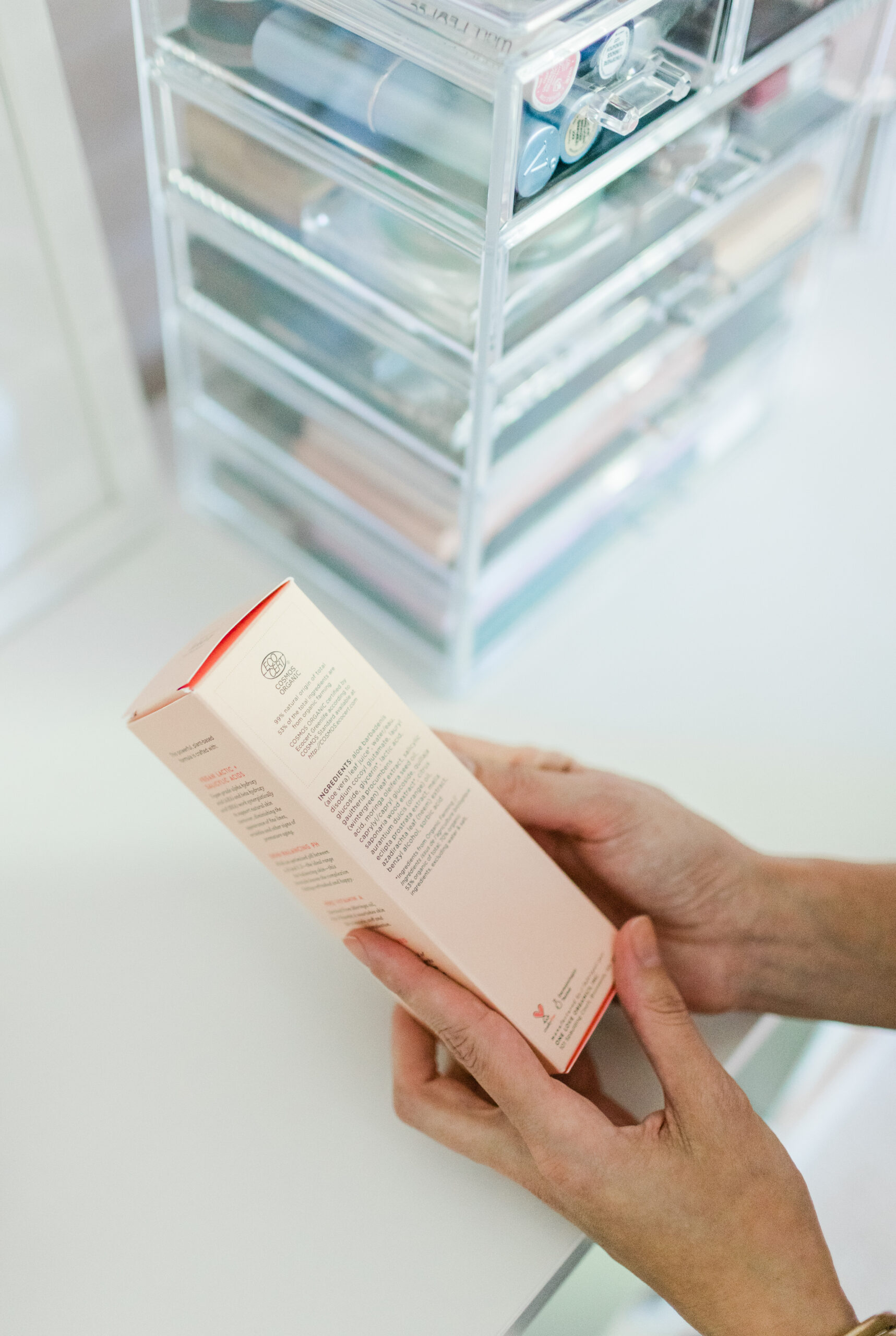
It’s typically listed toward the end of the ingredient list: a good reminder of why learning how to read a product label can help you spot ingredients you want to limit or avoid.
What Are Safe Phenoxyethanol Alternatives:
If you prefer to stick to clean beauty formulations and avoid phenoxyethanol, several alternative preservatives can help protect your products while keeping them gentle on the skin. Here are some of the most common safe phenoxyethanol alternatives:
1. Ethylhexylglycerin
This naturally derived ingredient is often used in paraben free and clean beauty formulations. It has mild antimicrobial properties and works synergistically with other natural preservatives. Ethylhexylglycerin is considered non-sensitizing and suitable for sensitive skin types.
2. Sodium Benzoate
A salt derived from benzoic acid, sodium benzoate is commonly used in food and cosmetic products. It’s gentle, effective at preventing microbial growth, and works well in water-based formulas. It’s also widely accepted in clean beauty standards.
3. Potassium Sorbate
Another food-grade preservative, potassium sorbate helps prevent mold and yeast without disrupting the skin barrier. It’s well-tolerated and often used in natural and organic skincare lines.
4. Leuconostoc/Radish Root Ferment Filtrate
This probiotic-based preservative comes from fermented radish root and offers natural antimicrobial protection. It’s a favorite among clean beauty brands because it’s both effective and naturally derived.
5. Caprylyl Glycol
Caprylyl glycol is a humectant that also has antimicrobial properties. It’s derived from fatty acids and helps maintain product stability while keeping skin soft and hydrated. It’s frequently paired with green tea extracts or botanical ingredients in clean beauty formulas.
So, is phenoxyethanol safe?
When used within the recommended limits, phenoxyethanol is considered safe and effective as a preservative in cosmetics and personal care products. However, many in green beauty choose not to use it due to contamination issues. If you prefer to keep your routine as natural as possible or have reactive skin, there are plenty of gentle alternatives that align better with a clean beauty philosophy.
Ultimately, the key is reading product labels, staying informed, and choosing what feels right for your skin and your values.

2 Comments