Organic Glass Cleaner: A Complete Guide to Safer, Streak-Free Shine
If you’ve ever spent time wiping glass surfaces only to spot streaks, cloudy residue, or lingering smudges, then you know that glass really does require its own type of glass cleaner. And with kids and dogs touching and even licking glass (mostly dogs doing the licking), I’m careful with what I use. Over the years, I’ve learned that not all glass cleaners are created equal. Some formulas work well, leaving a crystal-clear, streak free shine. While others contain ingredients that may be potentially toxic to human health or harmful to the environment. Between synthetic fragrance, harsh solvents, and aerosolized chemicals that linger in the air, conventional window sprays can sometimes feel like too much for the average home, especially if you’re striving for a healthier, lower-tox lifestyle.
That’s why today’s post is completely dedicated to Organic Glass Cleaner options. We’re breaking down everything you should know- from what’s actually in standard cleaners, to whether organic versions really exist, to some of my favorite safer picks. Whether you want a ready-to-use window cleaner or want to make your own using truly organic ingredients, this guide is here to help.
Organic Glass Cleaner
Let’s walk through what a glass cleaner is, the typical ingredients found in conventional versions, and whether they’re toxic. We’ll also talk about organic and non-toxic options, homemade recipes, and my favorite formulas for achieving clean, streak-free glass without compromising the air in your home.
When talking about “organic glass cleaner”, it usually refers to a cleaner made primarily from plant-based ingredients, many of which may be organically grown or organically derived. Unlike food, cleaning products aren’t commonly certified organic, so the term tends to refer to formulas that use organic essential oils, organic acids (like vinegar), and organic plant extracts rather than synthetic chemicals.
Choosing an organic or non-toxic formula is especially important for glass surfaces you clean frequently: kitchen windows, bathroom mirrors, glass doors, and even tabletops. These areas often get sprayed heavily and wiped multiple times per week, which means anything in your cleaner becomes part of your home’s air and surfaces. For example, if you’ve read my branch basics review, you already know how big of a difference plant-based cleaners can make.
Organic and non-toxic glass cleaners can be just as effective as conventional formulas (sometimes even more so) thanks to ingredients like vinegar, natural surfactants, and alcohol derived from organic plant sources.
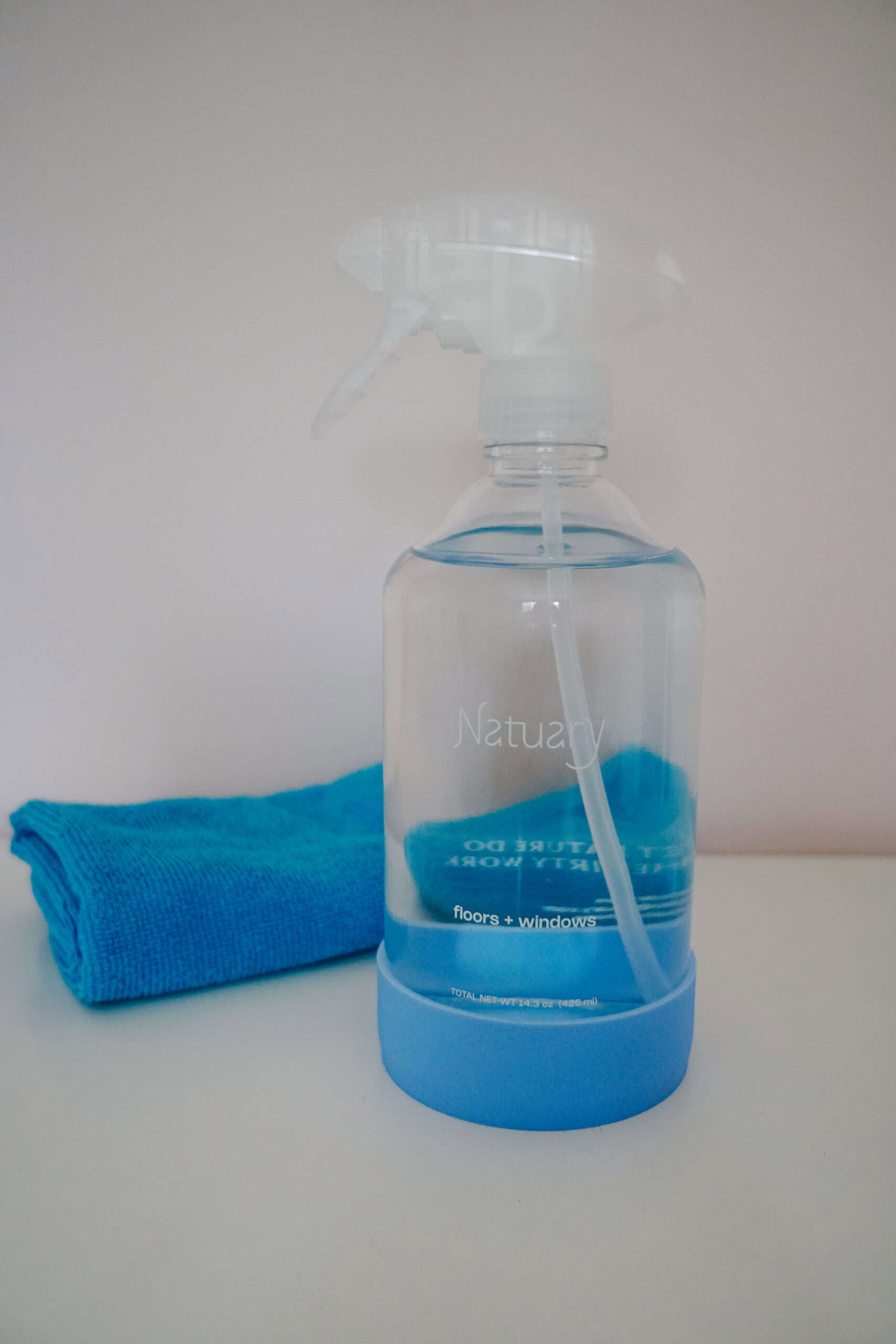
What Is A Glass Cleaner?
A glass cleaner is a specialized cleaning product formulated to remove fingerprints, smudges, dust, oils, and environmental film from glass surfaces. Unlike general-purpose cleaners, glass cleaners include fast-evaporating ingredients like alcohol or vinegar that help prevent streaking. They’re designed to break down the oils that our hands leave behind while evaporating quickly enough to leave a streak free shine.
Most window cleaner products rely on surfactants, solvents, and water to dissolve grime. A good glass cleaner should leave glass crystal clear without haze or residue. When used with a microfiber cloth, glass cleaners can lift dirt easily and reduce the need for scrubbing. They’re also ideal for mirrors, car windows, shower doors, and glossy surfaces with similar compositions.
Is Glass Cleaner Toxic?
Glass cleaners can be toxic, depending on the ingredients. Many conventional cleaners contain ingredients such as synthetic fragrance, ammonia, and glycol ethers like 2-butoxyethanol. These ingredients may irritate the respiratory system, trigger headaches, or contribute to indoor air pollution.
Ammonia-based cleaners, while effective, can release strong fumes. Synthetic fragrance blends can contain dozens of undisclosed chemicals, including potential allergens or hormone-disrupting compounds. Some formulas also include artificial dyes, preservatives, and petroleum-derived solvents that can accumulate in indoor air with repeated use.
However, not all glass cleaners are problematic. Natural and organic-leaning formulas use plant-based surfactants, vinegar, alcohol, and essential oils instead of harsh chemicals. These options are gentler and safer, especially if you’re cleaning around children or pets.
What Are the Ingredients in Glass Cleaner?
Common ingredients:
- Ammonia
- Isopropyl alcohol or ethanol
- Vinegar (acetic acid)
- 2-Butoxyethanol
- Synthetic fragrance
- Water
- Surfactants
- Sodium lauryl sulfate
- Dyes
- Glycol ethers
- Plant-based surfactants (in natural formulas)
- Essential oils (for scent)
Are There Organic Glass Cleaners?
So, do true organic glass cleaners exist? Yes, sort of. Cleaning products are not widely certified organic in the same way as foods or personal care products. However, a few brands offer glass cleaners containing certified organic ingredients like organic vinegar or organic essential oils. Some companies even sell products made with USDA Organic agricultural ingredients.
The more common category is “natural” or “non-toxic” glass cleaners, which avoid ammonia, dyes, synthetic fragrance, and harsh solvents. These products often rely on plant-derived surfactants, vinegar, and essential oils.
What Are The Best Organic Glass Cleaners?
Below are some of my favorite organic or organic-leaning glass cleaners. Each one is effective, gentle, and safe for everyday use in a healthy, non-toxic home.
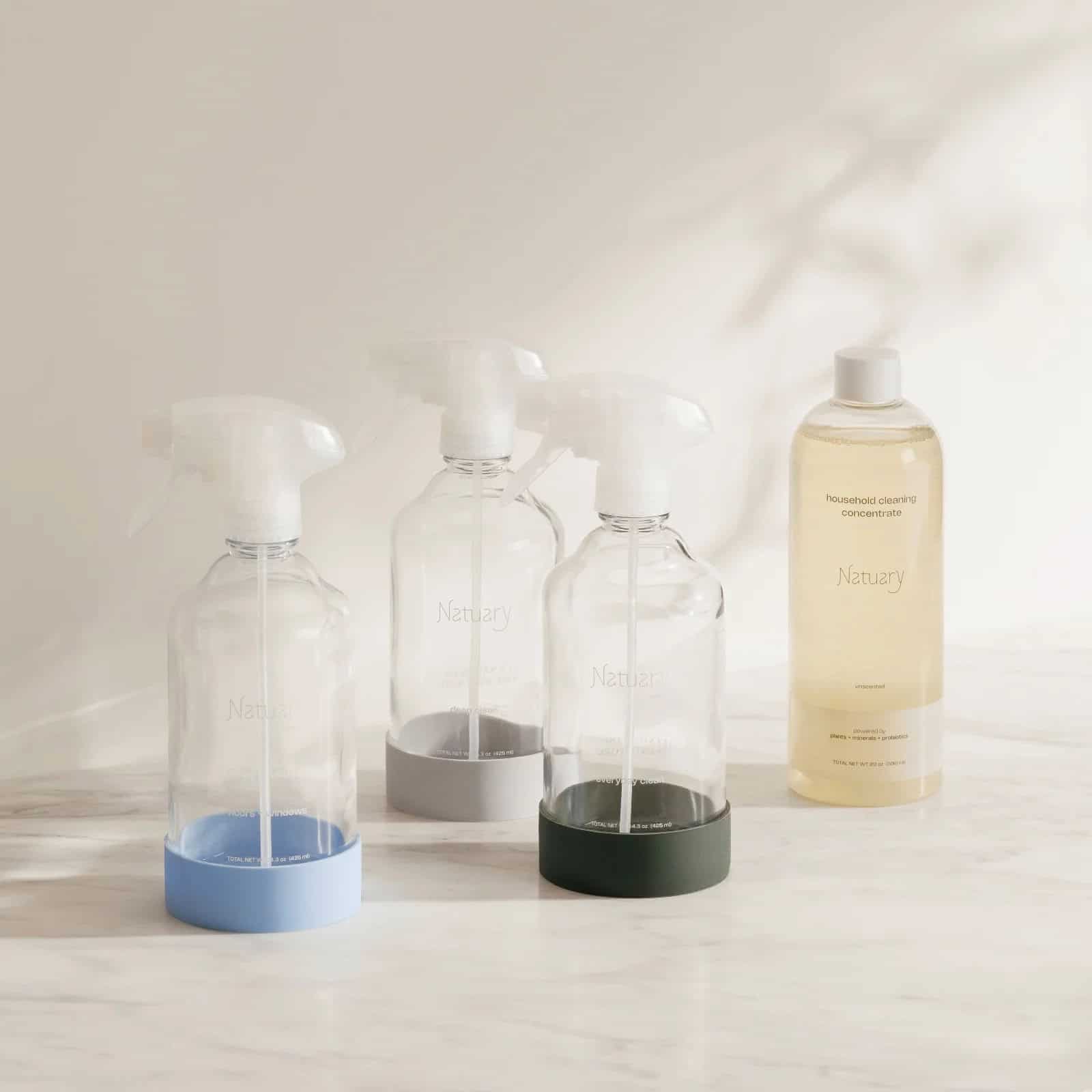
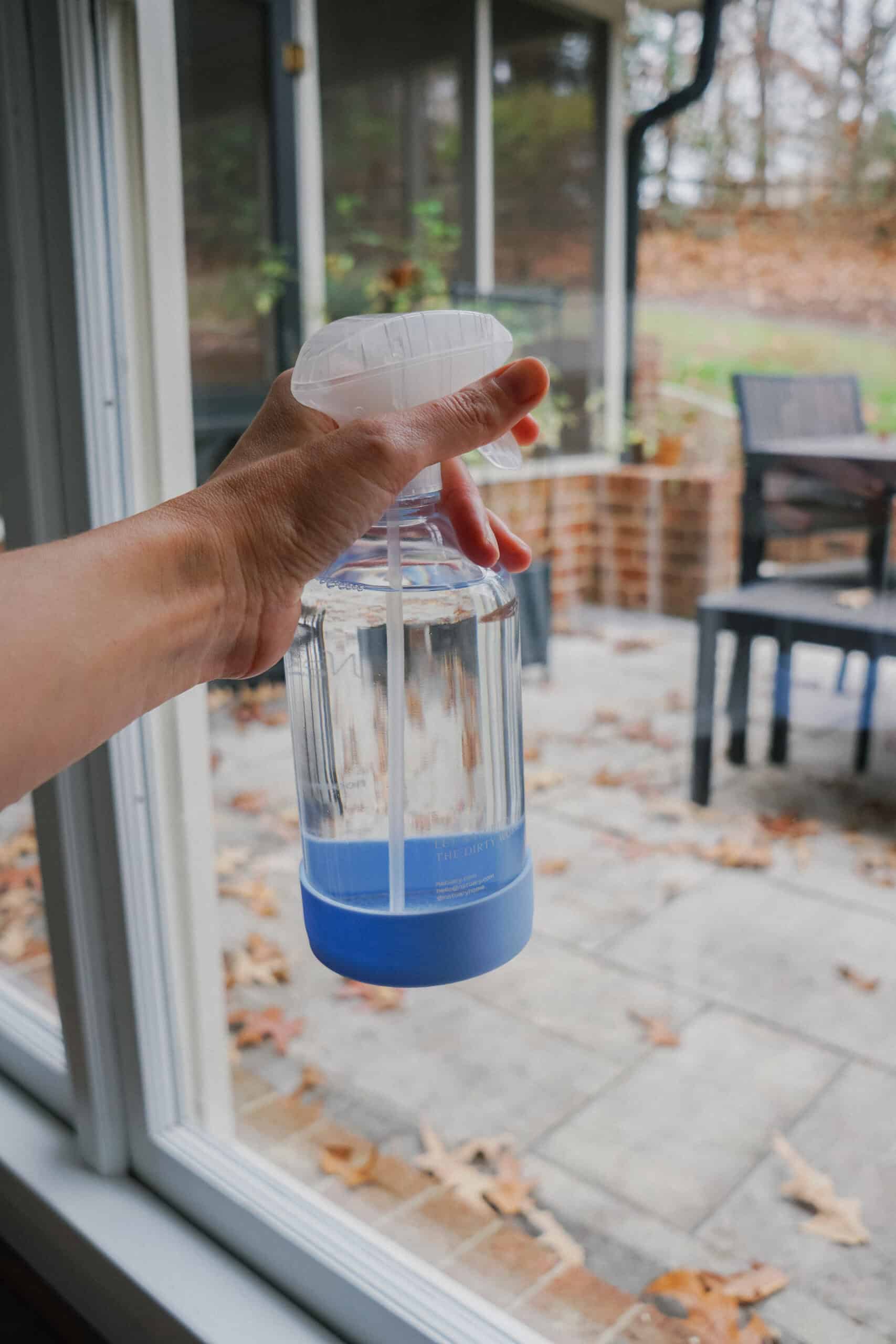
Natuary Glass Spray Bottle
Natuary doesn’t specifically sell a standalone glass cleaner product, but their plant-powered cleaning concentrate + refillable bottles can be formulated into an effective glass cleaning solution with water and essential oils if desired.
The brand focuses on gentle, enzyme-powered plant and mineral ingredients that are non-toxic and sustainable, which aligns well with safer home cleaning routines.
Consider adding a bit of distilled white vinegar or citrus essential oils when using the Natuary concentrate for extra grease-cutting power on glass surfaces.
Buy it here and use discount code MAISONPUR to save.

Branch Basics Premium Starter Kit
Branch Basics is comprehensive plant-based cleaning system that works as a gentle yet effective glass cleaner when diluted correctly- no harsh chemicals or synthetic fragrance.
Use the concentrated formula combined with water (according to directions) to mix glass cleaner in a spray bottle.
- Great for windows, mirrors, and other surfaces throughout your home. Ideal if you want an all-purpose cleaner that can also serve as a streak-free window cleaner.
- How to use: Dilute the concentrate with water in one of the glass spray bottles, then spray onto glass and wipe with a microfiber cloth for clarity.
Buy it here.
How To Make Homemade Glass Cleaner With Organic Ingredients
Homemade glass cleaner is simple, inexpensive, and fully customizable. Using organic ingredients helps ensure that the entire formula remains free of synthetic additives. I have at times used a simple 50/50 vinegar/water mixture, but I find the mixture below works even better.
Ingredients
- 1 cup organic distilled white vinegar
- 1 cup distilled water
- 1 tablespoon organic lemon juice (optional)
- 10–15 drops organic essential oils (like lemon, lavender, or peppermint)
- Optional: 1 tablespoon organic cane alcohol for extra shine
- Glass spray bottle
Instructions
Step 1: Add the vinegar and distilled water to your spray bottle.
Step 2: Add your organic essential oils for natural scent and added cleaning power.
Step 3: Add organic lemon juice or cane alcohol if desired.
Step 4: Shake gently to combine the mixture.
Step 5: Spray onto glass surfaces and wipe clean using a microfiber cloth for the best streak free shine.
Clean, Safe Glass
Choosing a safer glass cleaner doesn’t have to be difficult. By understanding the ingredients in conventional formulas, and exploring natural or organic options, you can easily create a healthier cleaning routine at home. Whether you choose one of the gentle, effective products listed above or try making your own recipe using organic ingredients, switching to an Organic Glass Cleaner is an easy way to reduce toxins while still getting sparkling, streak-free windows and mirrors. If you’ve been wanting to make your cleaning products work harder and cleaner for your home, this is a great place to start.