Is Cast Iron Cookware Safe?

Investing in safe cookware is something that anyone who cares deeply about creating a healthier home has probably thought about. We use our cookware daily, sometimes multiple times a day, and not all cookware materials are created equal. Some materials can leach potentially toxic substances into your food when exposed to high temperatures, which raises real concerns about long-term exposure.
Cast iron cookware is one of the most popular cookware options out there, often praised for its durability, heat retention, and its an old school classic! But popularity doesn’t always equal safety, which leads to an important question many people ask when trying to build a non-toxic kitchen: Is cast iron cookware safe? In this post, I’m breaking down exactly what cast iron cookware is, how it’s made, its safety profile, advantages, disadvantages, and the best cast iron cookware options to consider.
Is Cast Iron Cookware Safe?
When it comes to choosing cookware, safety is often just as important as performance. In this section, I’m going to walk you through what cast iron cookware actually is, how it’s made, and what that means for your health. Understanding these basics can help you decide whether or not investing in cast iron cookware makes sense for your kitchen and your lifestyle.
What Is Cast Iron Cookware?
Cast iron cookware refers to pots, pans, and skillets made primarily from iron that has been melted and poured into molds. Once cooled, the cookware becomes extremely hard, durable, and capable of handling very high temperatures.
The most common type is the cast iron skillet, but cast iron cookware also includes Dutch ovens, griddles, grill pans, and braisers. Unlike stainless steel cookware, cast iron is a single-material pan with no synthetic coatings when it’s traditional or unenameled (and side note: There are some popular brands of enameled cast iron out there. This post is focusing solely on uncoated/unenameled cast iron). This simplicity is one reason many people choose to cook with cast iron.

How Is Cast Iron Cookware Made?
Cast iron cookware is made by melting iron (often combined with small amounts of carbon) and pouring it into sand molds. Once the metal cools and hardens, the pan is removed from the mold and finished. Traditional cast iron cookware is then seasoned, a process where oil is baked onto the surface at high temperatures to create a natural, semi-nonstick layer.
In terms of materials, cast iron cookware is refreshingly simple. It typically contains:
- Iron
- Carbon
- Occasionally trace minerals
There are no synthetic coatings, PTFE, or chemical nonstick layers involved in traditional cast iron cookware, which sets it apart from many modern cookware options.
Are Cast Iron Cookware Safe?
Yes, cast iron cookware is generally considered safe, especially when compared to cookware with chemical-based nonstick coatings. Because cast iron is made from a single, stable material, there is no risk of synthetic chemicals breaking down at high temperatures.
One concern people sometimes raise is iron leaching. When you cook acidic foods (like tomato sauce) in cast iron cookware, small amounts of iron can transfer into the food. For most people, this is not harmful and may even be beneficial, particularly for those who are iron deficient. However, individuals with conditions like hemochromatosis may want to limit iron exposure.
The amount of iron that leaches can vary depending on:
- The acidity of the food
- How well-seasoned the pan is
- The length of time you cooked
For example, simmering tomato sauce for an extended time in a poorly seasoned pan may result in more iron transfer than quickly sautéing vegetables.
Why Use Cast Iron Cookware?
There are so many great reasons to use cast iron cookware! Below, I’ve broken each reason down into its own section.
Durability
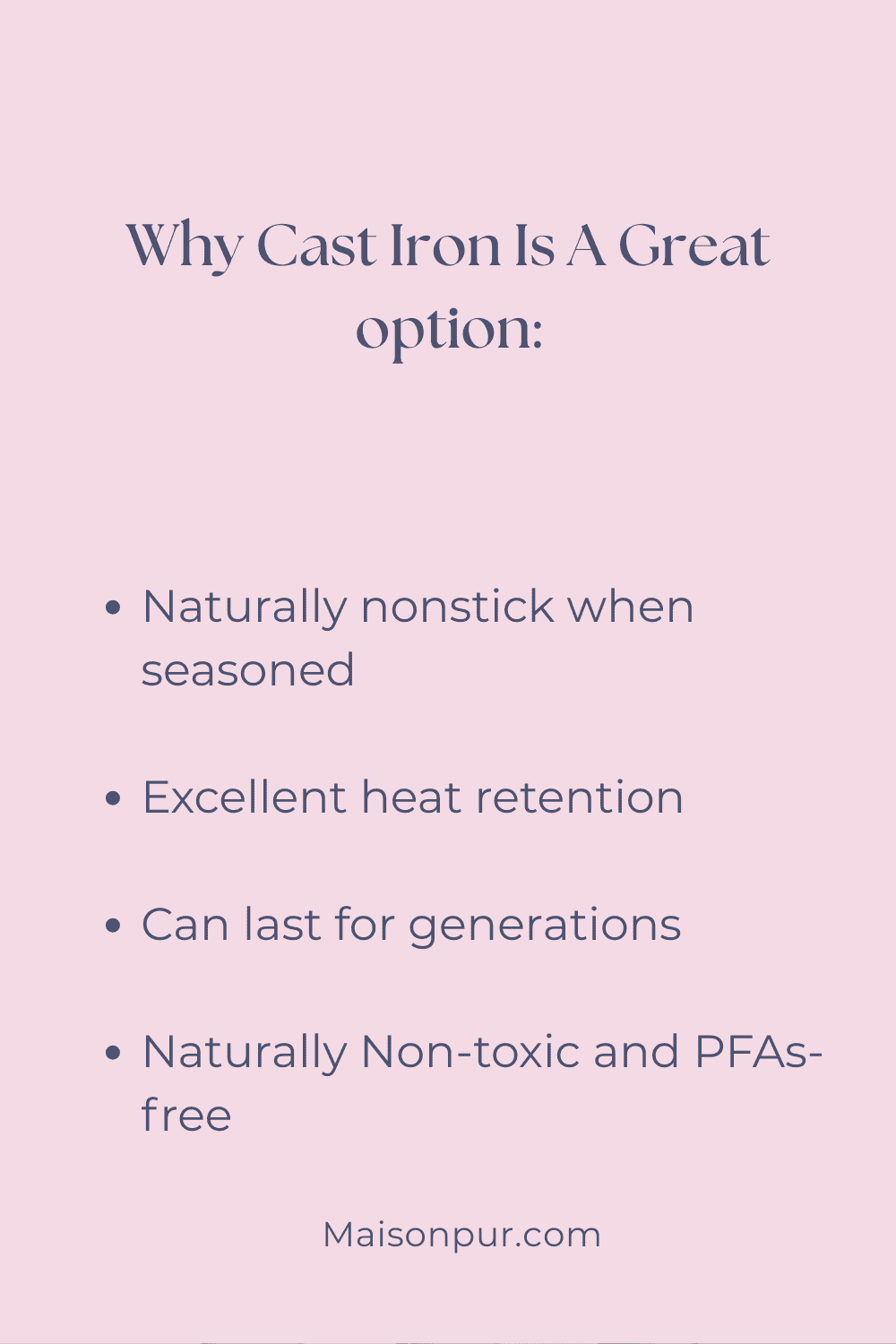
Cast iron cookware is incredibly durable. With proper care, a cast iron skillet can last for generations. Unlike stainless steel or coated pans, cast iron doesn’t warp easily and can withstand extremely high temperatures without degrading.
Non-Toxic Cooking Surface
One of the biggest reasons people choose to cook with cast iron is the lack of synthetic coatings. There’s no concern about chemical nonstick layers breaking down over time, which makes cast iron cookware a popular choice in non-toxic kitchens.
Excellent Heat Retention
Cast iron heats slowly, but once hot, it retains heat exceptionally well. This makes it ideal for searing, baking, and cooking foods evenly. It also transitions easily from stovetop to oven.
Naturally Nonstick When Seasoned
A well-seasoned cast iron skillet develops a smooth cooking surface that improves with each time you cooked. While it’s not quite the same as modern nonstick, it’s more than sufficient for most everyday cooking.
What Are The Disadvantages Of Cast Iron Cookware?
While cast iron cookware has many advantages, here are a few things to consider.
Weight
Cast iron cookware is heavy. A cast iron skillet can be difficult to maneuver, especially when full. This doesn’t affect safety directly, but it can increase the risk of accidental drops or spills. On the upside, this also makes it a pretty good weapon in a pinch.
Maintenance Requirements
Cast iron requires proper seasoning and care. It should not be soaked for long periods or washed in a dishwasher. Improper care can lead to rust, which may affect performance but not necessarily safety if addressed promptly. If it’s starting to stick, you may find that you need to re-season it.
Reactivity With Acidic Foods
As mentioned earlier, acidic foods like tomato sauce can react with cast iron cookware, especially if the seasoning layer is weak. While this doesn’t usually pose a safety risk, it can alter flavor and increase iron transfer.
Not Ideal for All Cooking Styles
Compared to stainless steel, cast iron cookware isn’t always the best choice for quick, delicate dishes. However, this is more about convenience than safety.
What Are The Best Cast Iron Cookware?
If you’re considering adding cast iron to your kitchen, quality matters. Here are some of the best cast iron cookware brands worth considering.
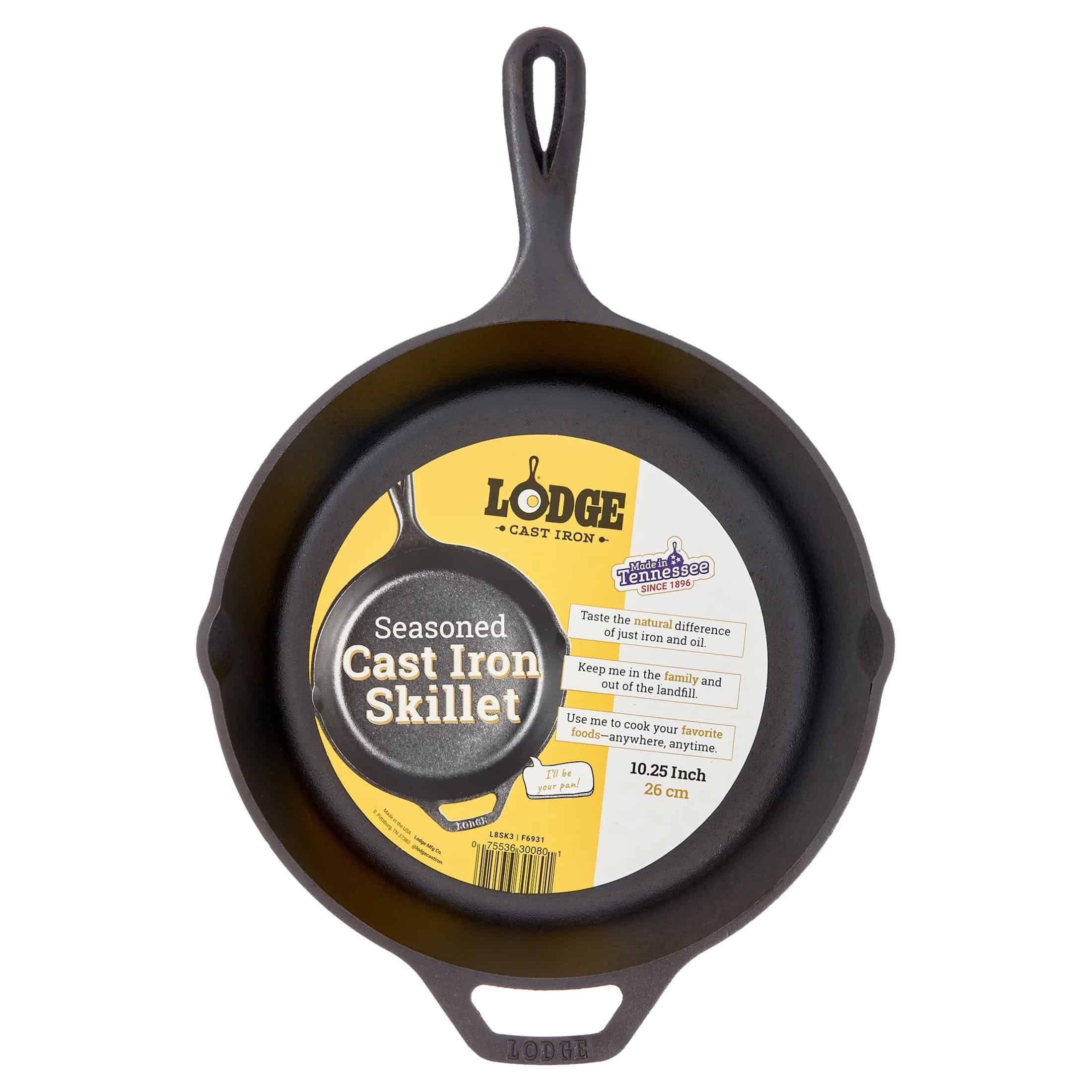
Lodge Cast Iron
Lodge is one of the most well-known and affordable cast iron cookware brands. Their cast iron skillet comes pre-seasoned and is made in the USA. Lodge cookware is reliable, accessible, and a great entry point for beginners. I will add the caveat that it’s seasoned with vegetable oil (non-organic as far as I can tell). It is possible to strip the seasoning and re-season it yourself if this gives you pause. I’ve done so on my Lodge Cookware.
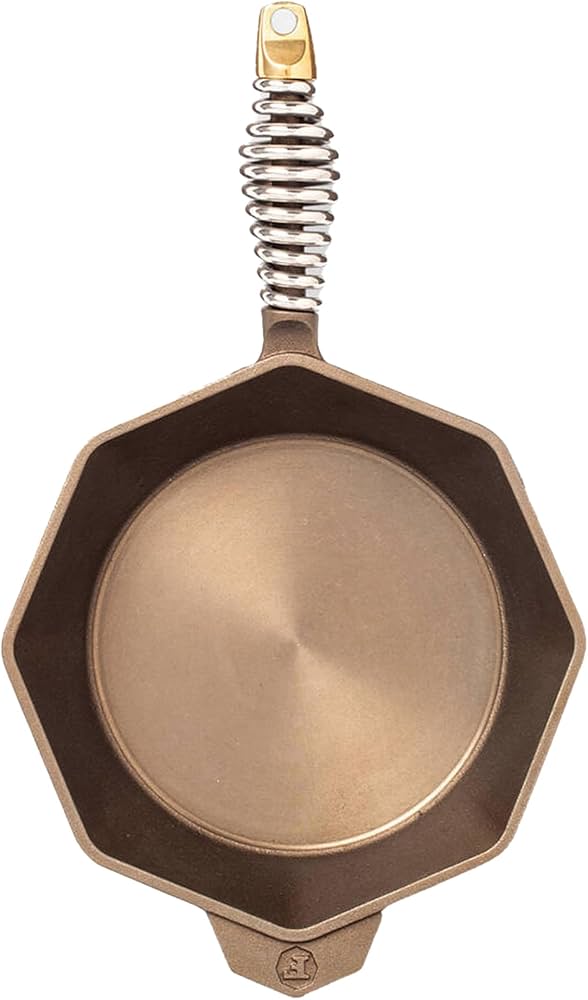
FINIX Seasoned Cast Iron
The mack daddy! FINIX Cast Iron is gorgeous, comes with a lid and cool coil handle, AND it’s organically seasoned with flax seed oil. You can’t ask for much more but it does come with a cost- it’s an expensive option but this one is well made and should last a lifetime (and be passed down to the next generation).
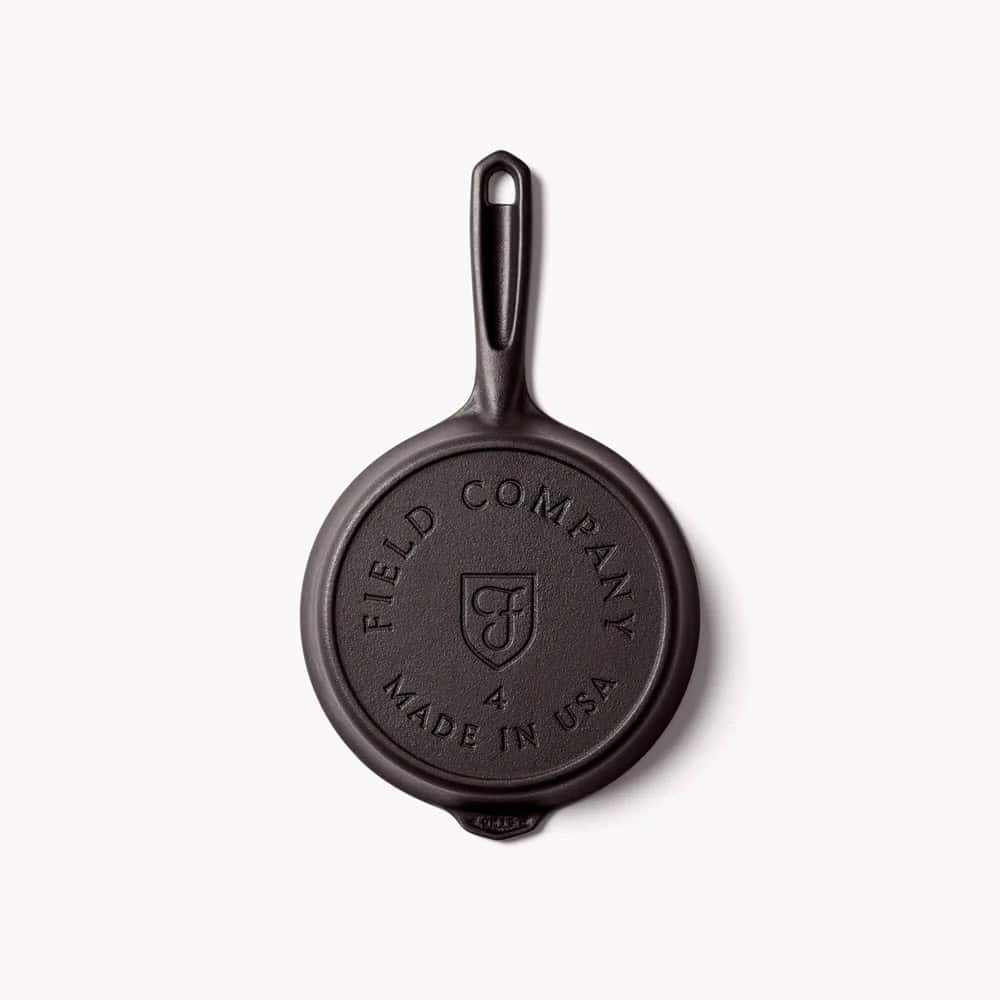
Field Company Cast Iron
Another great option and this one is seasoned with organic grape seed oil. Field Company worked to design their pans to be lighter than traditional cast iron, which is a big plus if the weight is an issue.
Final Thoughts On Cast Iron Cookware Safety
Overall, cast iron cookware is a safe and time-tested option for those looking to reduce exposure to potentially toxic materials in the kitchen. When properly seasoned and cared for, it performs beautifully at high temperatures and can be used for a wide variety of meals. It should also last for a very long time. I know people that inherited their grandmother’s cast iron skillet!
If you’re building a healthier kitchen, remember that cookware is just one piece of the puzzle. What you prep your food on matters too: check out my guide to the best non toxic cutting boards for safer prep surfaces. You may also want to compare cast iron cookware to newer hybrid options by reading is hexclad non toxic to see how they stack up.
When used thoughtfully, cast iron cookware can absolutely be part of a safe, non-toxic, and well-loved kitchen.